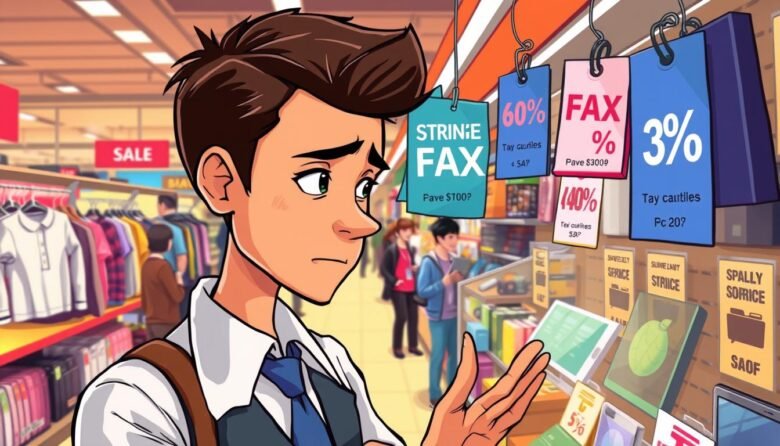
American shoppers face constant bombardment with seemingly incredible deals. Store displays scream “SALE! 60% OFF!” and “Black Friday Specials” that promise massive savings. Many of these offers aren’t genuine markdowns at all.
Research from Consumers’ Checkbook reveals a troubling pattern. Their six-month study tracked 25 major retailers across the United States. The findings show most companies use deceptive pricing strategies regularly.
Products were offered at supposed markdowns more than half the time. Twelve of the twenty-five retailers displayed false savings every week or almost every week. This practice prevents effective price comparison shopping.
Understanding these tactics matters because they manipulate shoppers. Consumers make immediate purchases based on false urgency and perceived value. The higher “regular” prices were rarely or never actually charged.
This isn’t isolated to small businesses. Well-known national chains employ these systematic practices. They affect millions of consumers and billions in retail transactions annually.
Key Takeaways
- Major retailers frequently display crossed-out “regular” prices that were never actually charged
- Deceptive pricing prevents consumers from effectively comparing prices across different stores
- False urgency tactics manipulate shoppers into making immediate purchase decisions
- This practice affects billions of dollars in retail transactions each year
- Research shows 12 of 25 major companies offer misleading markdowns weekly
- E-commerce fraud contributes significantly to consumer losses in online shopping
- Understanding pricing psychology helps shoppers make more informed decisions
Overview of Fake Discounts and Their Impact
Many retail promotions present a misleading picture of actual savings. This strategy involves advertising items at a sale price when they are seldom sold at the higher, crossed-out reference price.
Defining Fake Discounts and Deceptive Pricing
Deceptive pricing occurs when a retailer creates an artificial sense of value. They display a product with a slashed “original” price next to a lower current price.
This suggested savings does not reflect reality. The higher price was rarely, if ever, the actual selling point for the item.
The Federal Trade Commission provides clear guidelines. It states that advertising a former price is illegal if that price was not bona fide. A fictitious price established just to show a large reduction is considered misleading advertising.
Consumer Reactions and Perceptions
These tactics heavily influence how people shop. The illusion of a great deal triggers a fear of missing out.
Shoppers often feel pressured to buy immediately. They worry the price will increase soon. This urgency prevents careful comparison shopping.
Over time, these practices can damage trust. Customers who feel misled may become skeptical of all promotional claims from that retailer.
This can also lead to overspending. Believing they saved money, a customer might justify buying additional products they do not need.
Mechanisms Behind Creating Fake Discounts
The creation of misleading markdowns relies on a combination of pricing psychology and digital technology. Retailers develop sophisticated systems that manipulate consumer perception through carefully engineered strategies.
Retailer Tactics and Pricing Strategies
Companies establish artificial reference points by setting inflated “regular” prices. These baseline figures often represent amounts that products rarely sold for historically.
Many businesses maintain perpetual sales where items stay at supposedly reduced prices indefinitely. This pricing strategy creates constant apparent savings without genuine markdowns.
Role of Marketing Tools and Artificial Urgency
Digital countdown timers and “limited time” banners create false scarcity. These website elements pressure shoppers into immediate decisions.
Kohl’s provides one example of ambiguous disclosure practices. Their policy states reference prices might be future amounts not yet established.
This comprehensive approach combines urgency with perceived value enhancement. The business logic focuses on increasing conversion rates while reducing price comparison behavior.
Fake Discounts Explained in Detail
Consumer research studies provide concrete evidence of how national chains perpetually maintain artificial sale conditions. These investigations track specific products over extended time periods to reveal systematic patterns.
In-Depth Case Studies from Major Retailers
Sears demonstrated extreme practices in a 44-week study. Eight of nine monitored items remained on sale almost constantly. Two products showed discounted prices for the entire monitoring period.
Kohl’s employed a revealing disclaimer about their reference prices. They stated regular amounts could be “former or future” prices from their business or competitors. This admission shows their comparison prices may lack market reality.
Macy’s used a variable strategy across different product categories. Some items maintained near-constant sale status while others rarely received markdowns. The company defended this approach despite clear weekly patterns.
Examining Examples and Industry Practices
Honest retailers like Apple, Costco, and Dell conducted legitimate sales with genuine price reductions. Their practices prove ethical pricing remains possible in competitive markets.
The problem has worsened significantly over time. Research shows twenty-one of twenty-five retailers now advertise sale prices more than half the time. This compares to only six companies in earlier studies.
Digital marketplaces face similar issues. The Charlotte Lyon case involved a fraudulent online business claiming to be a closing boutique. The operation used countdown timers and 70% off claims while dropshipping cheap products.
This scam persisted even after regulatory shutdown. The same deceptive tactics immediately reappeared under a new domain. This illustrates enforcement challenges in today’s retail environment.
Regulatory and Legal Perspectives on Deceptive Sales
The legal landscape surrounding deceptive sales practices involves complex interactions between federal guidelines and state-level enforcement. While clear rules exist to protect consumers, implementation varies significantly across different jurisdictions.
FTC Guidelines and Enforcement Challenges
The Federal Trade Commission establishes specific criteria for legitimate pricing. Their rules require that any advertised former price must represent a bona fide amount at which products were actually sold.
This means retailers cannot create artificial reference prices solely to show large reductions. The former price must have been offered openly for a substantial period of time in regular business operations.
Despite these clear guidelines, enforcement remains challenging. The FTC has not taken significant action on these practices for decades according to consumer research organizations.
James Kohm of the Federal Trade Commission noted that regulation of sale duration has largely been left to state authorities. This creates a patchwork of enforcement across the country.
Implications for Consumer Protection Laws
State-level consumer protection laws address deceptive pricing with varying effectiveness. Some states specify how long items can remain on sale before returning to regular price.
Edgar Dworsky of ConsumerWorld.org observed that even states with strong consumer laws rarely pursue these cases. Limited resources and enforcement priorities contribute to this gap.
International comparisons show more aggressive approaches. France’s consumer protection agency recently fined Shein €40 million for inflated reference prices. This demonstrates alternative enforcement models.
Emerging frameworks like the EU’s Unfair Commercial Practices Directive explicitly prohibit manipulative tactics. These could serve as models for updating U.S. consumer protection standards.
Global Trends: Fake Discounts in the Digital Marketplace
Global e-commerce platforms have amplified deceptive pricing strategies across international borders. Online marketplaces enable retailers to reach consumers worldwide with manipulated pricing schemes. These practices cost shoppers billions annually while challenging regulatory enforcement.
International Cases and Comparisons
The Charlotte Lyon operation demonstrated how digital tools facilitate cross-border deception. This website presented as a French boutique closing its doors. It used emotional messaging and countdown timers to create false urgency.
French authorities fined Shein €40 million for systematic reference price inflation. This penalty highlighted how companies employ these tactics across thousands of products. The case revealed patterns beyond isolated errors.
Regulatory approaches vary significantly between regions. Europe’s Digital Services Act explicitly prohibits manipulative tactics like false scarcity. The United States relies on FTC Act Section 5 enforcement.
Impact of E-Commerce Fraud and Digital Tools
Sophisticated technology now powers these deceptive strategies. AI tools automate pricing algorithms that manipulate reference prices. Countdown timers and emotional design elements pressure people into hasty purchases.
During events like Black Friday, retailers deploy aggressive discount claims worldwide. These promotions often represent questionable savings. Consumers should verify prices across multiple days before buying.
New detection tools help combat these practices. AI-powered scanners identify dark patterns on e-commerce websites. They suggest compliant alternatives to protect shoppers.
Conclusion
Protecting yourself from deceptive sales tactics demands both awareness and practical shopping strategies. Research confirms these questionable pricing practices affect consumers across retail and e-commerce platforms.
Always verify sale prices against competitors before purchasing. Use price-tracking tools and take your time despite urgency messaging. Contact businesses directly for competitive quotes on major items.
Report suspicious pricing to consumer protection agencies. Together, consumers and regulators can create a marketplace where sales represent genuine value.