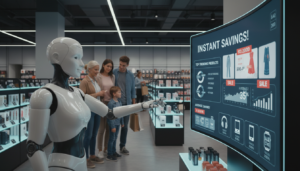
Modern retail faces constant pressure to operate more efficiently. Businesses seek innovative ways to reduce costs while improving customer experiences. Technology-driven solutions now offer powerful methods to streamline operations.
The global retail automation market is projected to reach approximately $33 billion by 2030. This growth reflects widespread adoption of systems that handle repetitive tasks. Companies recognize the value of optimizing their most valuable resource—time.
According to McKinsey research, about half of all retail activities can be automated using current technology. This represents significant untapped potential for many organizations. Forward-thinking companies are already implementing these solutions today.
Thirty-one percent of organizations have fully automated at least one business function. These systems transform manual processes into efficient operations. They free up teams to focus on strategic initiatives rather than routine tasks.
Key Takeaways
- The retail automation market is growing rapidly, expected to reach $33 billion by 2030
- Approximately 50% of retail activities can be automated with existing technology
- Nearly one-third of organizations have already fully automated at least one function
- These systems help businesses optimize time allocation and resource management
- Automation transforms manual processes into efficient, scalable operations
- Companies can redirect human effort toward higher-value strategic activities
- Implementation leads to significant cost savings and operational improvements
Understanding the Rise of Automated Retail Processes
A fundamental restructuring of retail methodologies is underway as technology becomes more integrated. This transformation represents more than just adopting new tools—it’s a complete rethinking of how retail operations function.
The Shift from Manual to Automated Workflows
Traditional manual approaches face significant challenges in today’s retail environment. Human-performed tasks often suffer from inconsistency and fatigue-related errors.
These systems use predefined rules to execute tasks with minimal intervention. This ensures consistent performance and reduces the risk of important steps being overlooked.
The transition addresses the limitations of human-dependent operations. Automated solutions can operate continuously without breaks or downtime.
Retail Technology Trends and Future Projections
Current trends indicate that retail transformation goes beyond simple tool adoption. Companies are fundamentally redesigning their operational processes for maximum efficiency.
Future projections show exponential growth in this area. The projected $33 billion market valuation by 2030 reflects widespread recognition of competitive advantages.
Businesses understand that successful implementation requires identifying suitable processes. Routine, repetitive tasks are ideal candidates for this type of system.
This technological evolution is driven by both capability and necessity. Companies must manage rising costs while meeting increasing customer expectations.
The Impact of Automation on Time and Cost Savings
When businesses implement automated solutions, they unlock continuous operational capabilities that human teams cannot match. These systems deliver measurable improvements in both resource allocation and financial performance.
Benefits of 24/7 Operational Efficiency
Automated processes operate continuously without breaks or downtime constraints. This constant availability eliminates delays caused by employee schedules or fatigue.
The technology maintains consistent processing speeds regardless of workload volume. This eliminates the time wasted when humans switch between different activities.
Reducing Errors and Streamlining Processes
Manual data entry inevitably introduces mistakes and bias. Automated systems execute tasks with perfect accuracy according to predefined rules.
This error reduction translates directly into cost savings. Companies spend less time and money correcting preventable mistakes.
Streamlined operations eliminate redundant steps and paperwork. Workflows move efficiently from one stage to the next without bottlenecks.
These improvements free up financial and human resources for higher-value activities. Businesses can redirect efforts toward strategy development and customer relationships.
Leveraging Workflow Automation in Retail Operations
Retailers today face the dual challenge of maintaining optimal stock levels while meeting accelerated delivery expectations. These interconnected functions form the operational backbone of successful retail management.
Enhancing Inventory Management
Seventy-two percent of retailers plan to use workflow automation for supply chain improvement. This technology provides real-time visibility into stock status across all locations.
Automated systems deliver actionable insights about product movement and reorder timing. When integrated with POS software, they trigger alerts for low inventory levels.
This prevents stockouts and optimizes inventory investment. Businesses maintain ideal stock quantities without excessive storage costs.
Optimizing Order Processing and Fulfillment
Order fulfillment speed directly impacts customer retention. Forty-five percent of consumers abandon carts if delivery seems too slow.
Automated order processing streamlines the entire fulfillment workflow. It accelerates payment confirmation, picking, packing, and shipping stages.
Nearly seventy percent of customers avoid retailers with late deliveries. Efficient fulfillment processes become essential for competitive advantage. They ensure timely delivery while reducing errors.
Enhancing the Customer Experience with Automated Solutions
Today’s consumers expect immediate, personalized interactions with the brands they support. Implementing intelligent systems within customer service workflows directly addresses these expectations. This approach processes requests faster and keeps people better engaged.
It transforms standard support into a responsive, tailored journey. The goal is to make every customer feel uniquely valued.
Integrating Chatbots for Faster Support
AI-powered chatbots are essential for modern customer support. They handle common queries instantly, providing answers any time of day.
These tools route complex issues to human agents seamlessly. This 24/7 availability is crucial for serving international audiences across time zones. It ensures immediate assistance without delays.
Efficient workflows create a positive first impression. They set clear expectations and maintain consistent communication.
Personalizing Communications and Offers
Technology enables deep personalization at scale. Systems analyze customer data and behavior patterns to deliver relevant content.
This includes tailored product recommendations and customized promotional offers. Such scalable personalization would be impossible to achieve manually. It allows businesses to treat each individual uniquely, even while serving millions.
This strategic use of automation strengthens relationships. It encourages repeat purchases and builds lasting loyalty.
Maximizing Sales and Marketing with Automated Campaigns
Digital marketing strategies have evolved beyond manual execution to sophisticated automated systems. These approaches handle repetitive tasks while maintaining personalized engagement.
Companies invest significant resources in outreach efforts. Businesses allocated approximately 9.5% of revenue to marketing budgets in 2022.
Email and Social Media Automation Strategies
Email marketing automation delivers messages at optimal moments in the customer journey. This approach significantly outperforms generic broadcast emails.
Social media automation maintains consistent brand presence across platforms. Scheduled posts ensure regular engagement without daily manual effort.
These systems generate personalized product recommendations based on browsing behavior. They also trigger communications during order processing.
Automating Lead Nurturing and Follow-ups
Lead nurturing automation guides prospects through the buyer’s journey. It provides timely, value-driven interactions at each stage.
Welcome email sequences introduce new subscribers to your brand. They communicate unique value propositions and set communication expectations.
Automated follow-ups respond immediately to prospect engagement. This builds trust and positions your business as the ideal solution.
Integrating Automated Systems with Existing Retail Software
The true power of retail technology emerges when different systems communicate seamlessly with each other. This integration creates a unified ecosystem where information flows freely between departments.
Successful implementation connects enterprise resource planning with point-of-sale platforms. This approach eliminates information silos that often hinder operational efficiency.
Connecting ERP and POS for Real-time Data
Linking these critical systems provides instant visibility across all business locations. Sales data from POS terminals updates inventory levels in the ERP immediately.
This real-time synchronization prevents stockouts and overordering. Automatic alerts trigger when products reach predetermined reorder points. The system can even initiate purchase orders without manual intervention.
Leveraging Actionable Insights for Decision Making
Integrated platforms analyze vast amounts of information from multiple sources. They identify patterns that would be difficult to spot manually.
These insights support demographic studies and sales forecasting. Business leaders gain access to comprehensive data for strategic planning. The technology transforms raw numbers into valuable intelligence.
This approach reduces errors by eliminating duplicate data entry. Companies maintain consistent, accurate information across all connected software.
Optimizing Vendor and Order Management through Automation
Managing multiple suppliers requires sophisticated coordination systems that many businesses struggle to maintain manually. Traditional approaches often lead to delays and administrative bottlenecks.
Technology-driven solutions transform these complex relationships into efficient partnerships. They handle the entire supplier lifecycle with precision.
Streamlining Vendor Onboarding and Communications
Manual vendor setup creates significant delays through excessive paperwork and approval chains. Automated onboarding workflows systematically collect documentation and verify credentials.
These systems generate contracts and route approvals through appropriate channels. They complete setup processes in a fraction of the time required for manual handling.
Automated communication ensures consistent information exchange between retailers and suppliers. This minimizes misunderstandings and maintains transparency.
Improving Order Tracking and Fulfillment Efficiency
Order management automation streamlines confirmation emails and invoice approvals. Vendors receive timely updates about order status and payment schedules.
Performance tracking monitors compliance against predetermined key performance indicators. The system automatically flags deviations from expected standards.
This approach strengthens supplier relationships while improving operational efficiency. Businesses gain better negotiating positions and product quality.
Best Practices for Setting Up Effective Automation Workflows
Implementing successful automation requires careful planning and strategic execution to maximize benefits. Following proven methodologies ensures your investment delivers measurable improvements in efficiency and accuracy.
Key Steps to Map and Implement Your Workflow
Begin by thoroughly documenting your current processes. Identify each action, decision point, and handoff between teams.
Successful systems consist of three core components: specific tasks to perform, criteria determining when actions execute, and events that initiate the sequence. Start with small pilot projects before full deployment.
Thorough testing and team training are essential for smooth implementation. Establish clear metrics to measure impact on operational efficiency.
Avoiding Common Pitfalls in Automation
Not all processes are suitable for this approach. Focus on routine, repetitive tasks rather than activities requiring complex judgment.
Avoid creating overly complex systems that become difficult to maintain. Build in exception handling for unusual situations.
Involve frontline employees in design since they understand daily tasks best. Continuously monitor and refine your approach as business needs evolve.
Remember that successful implementation is an iterative process requiring ongoing optimization rather than a one-time setup.
Maximize Efficiency with Shopping Automation Workflows
Seeing how other organizations successfully implement these systems provides the clearest understanding of their potential. Concrete examples demonstrate measurable improvements in operational performance.
Real-World Examples and Success Stories
Many companies use automated onboarding for new employees. This approach sends welcome emails and training assignments automatically.
E-commerce businesses recover sales with abandoned cart reminders. These systems detect when shoppers leave items behind.
One practical example involves smart home device purchases. Customers receive follow-up emails with user manuals and complementary product recommendations.
This approach maximizes product value and strengthens customer relationships. It transforms single purchases into ongoing engagements.
Tips to Tailor Automation to Your Business Needs
Start by identifying your highest-impact processes. Focus on repetitive tasks that consume significant team time.
Customize templates to reflect your brand’s unique voice. Segment audiences for personalized experiences that feel genuine.
Continuously test and refine your approach based on performance data. What works for one company may need adjustment for another.
This real-world implementation strategy ensures your investment delivers tangible efficiency gains. The right workflow adapts to your specific operational requirements.
Conclusion
The retail industry stands at a pivotal moment where strategic technology adoption separates market leaders from followers. Intelligent workflow systems represent essential tools for staying competitive in today’s rapidly evolving market.
These solutions empower businesses of all sizes to optimize resource utilization and boost productivity. Companies can deliver personalized experiences that make customers feel genuinely valued.
Technology continues to evolve with exciting future possibilities for retail operations. Retailers who embrace these innovations today gain significant competitive advantages.
Successful implementation focuses on enhancing human capabilities rather than replacing them. This approach frees teams for strategic work while maintaining operational excellence.
Begin by identifying high-impact processes and starting with manageable pilot projects. In today’s competitive landscape, these systems are necessary investments for long-term success and sustainability.