Businesses are constantly seeking innovative strategies to maximize customer retention and boost revenue. One effective approach is integrating loyalty rewards with coupons, creating a unified incentive system that enhances the overall customer experience.
However, many retailers operate their promotion and loyalty programs in isolation. This disjointed approach can lead to inconsistent messaging and significant revenue leakage, with studies indicating that up to 20% of revenue is lost due to overlapping discounts.
By thoughtfully integrating loyalty rewards with coupons, businesses can increase customer lifetime value, protect profit margins, and foster greater customer engagement. This comprehensive guide will explore how to create a seamless and effective loyalty program that complements your promotional campaigns.
Key Takeaways
- Understand the benefits of integrating loyalty rewards with coupons.
- Learn how isolated loyalty and promotion programs can lead to revenue leakage.
- Discover strategies to enhance customer lifetime value through unified incentive systems.
- Explore best practices for implementing a technically integrated loyalty program.
- Find out how to protect profit margins while promoting customer engagement.
Understanding the Value of Loyalty Programs and Coupons
Combining loyalty rewards with coupons represents a sophisticated marketing strategy that can drive substantial business growth by fostering loyal customer relationships. To fully leverage this potential, it’s essential to understand the distinct roles that loyalty programs and promotional campaigns play in a company’s overall customer retention strategy.
The Difference Between Loyalty Programs and Promotional Campaigns
Loyalty programs and promotional campaigns serve different purposes and operate on different timescales. Promotional campaigns are typically short-term “sprints” designed to drive immediate sales through limited-time offers, seasonal sales, or special events. These campaigns are tactical initiatives that can last from weeks to several months. On the other hand, loyalty programs are long-term “marathons” focused on sustainable growth and building lasting customer relationships. They usually span quarters or years, requiring consistent investment and patience.
Research has shown that emotionally loyal customers spend up to twice as much with their preferred brands. Moreover, 84% of consumers are more likely to remain with brands that offer structured loyalty programs. This highlights the significant value of loyalty initiatives in driving long-term customer loyalty and increasing revenue.
Why Most Retailers Run These Programs in Isolation
Despite their complementary nature, many retailers run loyalty programs and promotional campaigns in isolation. This separation is often due to organizational silos, disconnected systems, and different teams managing each program. As a result, retailers miss out on potential synergies between these initiatives, leading to revenue leakage of 15-20% from overlapping discounts and confusing customer experiences. By understanding the reasons behind this isolation, businesses can take steps to integrate their loyalty and promotional efforts more effectively.
By recognizing the distinct benefits and potential synergies between loyalty programs and coupons, businesses can develop a more cohesive marketing strategy that enhances customer loyalty, drives revenue, and fosters sustainable growth.
The Business Case for Combining Loyalty Rewards With Coupons
The business case for combining loyalty rewards with coupons is rooted in the potential for increased customer retention and revenue growth. By integrating these two strategies, businesses can create a more cohesive and effective marketing approach.
Revenue Leakage from Disconnected Systems
Most companies operate with 11 or more separate data systems, creating fundamental technical barriers to coordinated incentive management. This structural fragmentation leads to revenue leakage through uncoordinated discounts, double-dipping, and margin erosion. Disconnected systems transform what should be complementary strategies into competing initiatives that damage both business metrics and customer relationships.
Customer Experience Benefits of Integration
Integrating loyalty rewards with coupons enhances the customer experience by providing consistent messaging across touchpoints, personalized offers based on loyalty status, and a seamless shopping journey. This integration boosts customer engagement and retention by making interactions with the brand more cohesive and rewarding.
Impact on Customer Lifetime Value
Customers who engage with both loyalty programs and coupons have significantly higher lifetime value – up to 273% higher than regular customers. By combining these strategies, businesses can increase customer lifetime value and drive long-term growth. Research shows that properly integrated systems drive 10-15% higher annual revenue than disconnected approaches.
Common Challenges When Merging Reward Systems
Merging loyalty rewards with coupon systems can be a complex task due to various operational and technical challenges. Businesses face significant hurdles when attempting to integrate these systems, affecting their overall loyalty program strategy and customer satisfaction.
Technical Integration Hurdles
One of the primary challenges is the technical integration of loyalty programs and coupon systems. Legacy systems, data silos, and incompatible platforms often hinder the integration process. Companies must invest in compatible technology and robust data management systems to overcome these technical integration hurdles. Effective integration enables businesses to provide seamless customer experiences and maximize the benefits of their loyalty programs.
Preventing Double-Dipping Without Frustrating Customers
Another significant challenge is preventing double-dipping without frustrating customers. Double-dipping occurs when customers exploit gaps in the system by using multiple discount mechanisms simultaneously. To prevent this, businesses must implement coordinated discount rules across their systems. However, they must do so without creating a negative customer experience. Finding this balance is crucial for maintaining customer trust and loyalty.
Balancing Short-Term Sales with Long-Term Loyalty
Businesses also struggle to balance short-term sales goals driven by promotional campaigns with long-term loyalty objectives. Different teams often manage loyalty programs and promotional campaigns, each with their own KPIs. Aligning these teams and setting unified goals is essential for achieving a balanced approach. By doing so, businesses can ensure that their short-term sales strategies support their long-term loyalty goals, ultimately driving revenue and customer engagement.
Step-by-Step Guide to Creating a Unified Incentive System
Creating a unified incentive system requires a strategic approach to combining loyalty rewards and coupons. This integration can drive significant revenue growth, with research showing that properly integrated systems drive 10-15% higher annual revenue than disconnected approaches.
Auditing Your Current Loyalty and Coupon Programs
The first step in creating a unified incentive system is to audit your current loyalty and coupon programs. This involves understanding their strengths, weaknesses, and current performance metrics. Analyze customer engagement, redemption rates, and the overall impact on sales and customer retention.
Identifying Integration Points Between Systems
Next, identify potential integration points between your existing loyalty and coupon systems. This could be through APIs, customer data platforms, or other technical solutions. The goal is to create a seamless flow of data between systems, enabling a unified view of customer interactions.
Setting Clear Rules for Combined Rewards
To prevent margin erosion while maximizing customer value, it’s crucial to set clear rules for combined rewards. Define a clear hierarchy of rewards application, specifying when loyalty points can be combined with coupons and when they cannot. This ensures a balanced approach that rewards customers without compromising business profitability.
By following these steps, businesses can create a unified incentive system that not only enhances customer engagement but also drives revenue growth. The key is to leverage data to inform decisions, ensuring that the combined rewards strategy is both effective and sustainable.
Effective Strategies for Combining Loyalty Rewards and Coupons
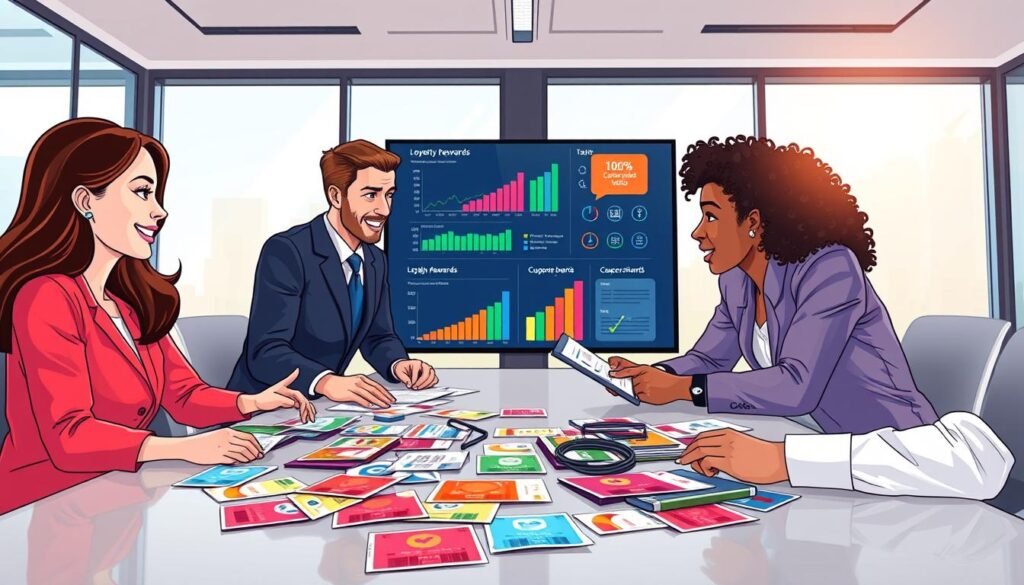
By merging loyalty rewards with coupons, companies can create a more compelling and personalized experience for their customers. This integration can lead to increased customer engagement and business value.
Using Loyalty Tiers to Personalize Promotions
Businesses using tier-based personalization see a 1.8x higher return on investment than non-tiered programs. Tiered loyalty programs naturally segment customers, creating an ideal foundation for personalized promotions. By leveraging loyalty tiers, companies can offer targeted coupons and rewards that resonate with their customers.
Replacing Discounts with Point Acceleration Events
Point-based rewards consistently outperform direct discounts in driving incremental spending. Replacing straight discounts with point acceleration events, such as “triple points weekend,” can protect margins while increasing customer engagement. This approach also leverages the “numerosity effect,” where customers respond more positively to point bonuses than equivalent cash discounts.
Rewarding Non-Transactional Activities
Effective loyalty programs reward customers for broader engagement beyond purchases. Activities such as social engagement, providing data, writing reviews, and referrals can enhance both loyalty and promotional campaign performance. By recognizing and rewarding these non-transactional activities, businesses can foster a deeper connection with their customers.
By implementing these strategies, businesses can create a powerful synergy between loyalty rewards and coupons, driving customer loyalty and repeat business. With 69% of customers more likely to participate in promotions tied to loyalty benefits, the potential for growth is significant.
Implementing Tiered Benefits for Maximum Impact
Implementing tiered benefits is crucial for maximizing the impact of combined loyalty and coupon strategies. By creating a structured loyalty program with multiple tiers, businesses can encourage customers to engage more deeply with their brand, increasing both loyalty and customer lifetime value.
Creating Exclusive Experiences for High-Tier Members
Top-tier loyalty members often respond better to exclusive access and recognition than to deeper discounts. By offering unique experiences, such as early access to new products or exclusive events, businesses can improve retention metrics and emotional loyalty among their most valuable customers.
Designing Tier Upgrade Campaigns
Effective tier upgrade campaigns target members near qualification thresholds, using progress tracking and gamification to motivate customers to “level up.” These campaigns drive significant incremental revenue and encourage customers to make more purchases to achieve the next tier.
Transitioning from Promotional Offers to Loyalty Engagement
As customers become more engaged with a loyalty program, businesses should transition them from promotional offers to more meaningful loyalty engagement. With 68% of consumers becoming more likely to make repeat purchases after joining loyalty programs, this transition is crucial for long-term customer retention and value.
To achieve this, businesses should focus on creating clear value differentiation between tiers, driving aspiration and increased spending. Thresholds requiring 25-30% spending increases between tiers work effectively to drive upgrade behavior without feeling unattainable. By strategically using promotional campaigns at different stages of the customer lifecycle, businesses can maximize the impact of their loyalty and coupon strategies.
Technical Requirements for Seamless Integration
Effective integration of loyalty rewards and coupons demands a comprehensive understanding of the technical requirements. To achieve seamless integration, businesses must focus on connecting their loyalty engines to promotion infrastructure.
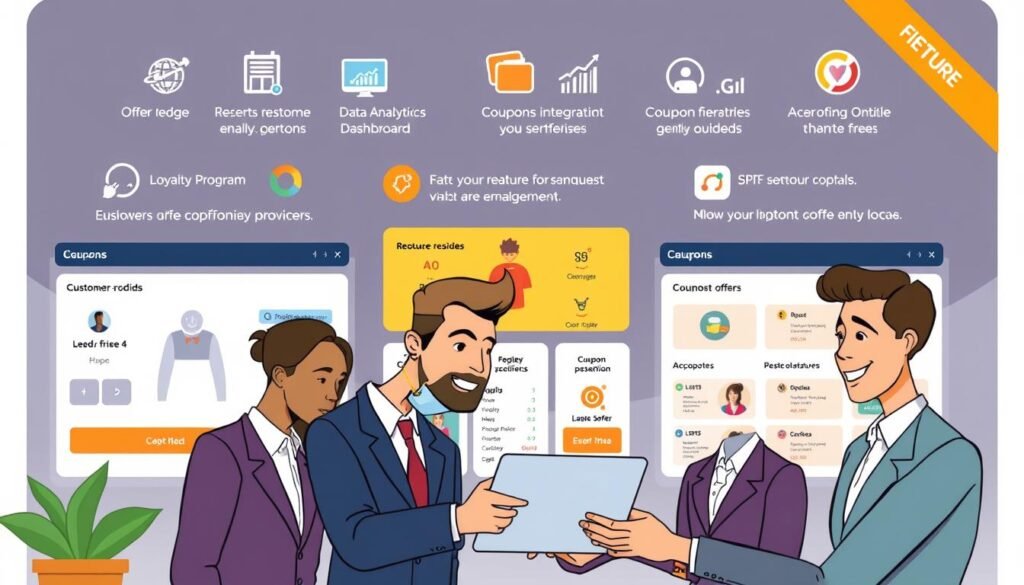
API-First Architecture for Connected Systems
An API-first architecture is crucial for connecting loyalty engines to promotion infrastructure, enabling real-time data exchange between systems. This approach allows for the synchronization of customer data, ensuring that loyalty status is applied correctly to promotional rules.
Customer Data Platforms as the Central Hub
Customer Data Platforms (CDPs) serve as the central nervous system of unified incentive architectures, centralizing customer data from multiple sources. By leveraging CDPs, businesses can create a unified customer identity across both loyalty and promotion systems.
Real-Time Transaction Validation
Real-time transaction validation is critical for applying loyalty status to promotional rules and preventing double-dipping. This capability ensures that customers receive the correct rewards and discounts, enhancing their overall experience.
The integration must be capable of handling high transaction volumes, processing over 100,000 requests per minute with 60-millisecond response times. By meeting these technical requirements, businesses can create a seamless and efficient loyalty and coupon integration system.
Real-World Examples of Successful Hybrid Programs
Retail giants like Sephora, Nordstrom, and Astrid & Miyu have revolutionized their customer engagement strategies by integrating loyalty programs with promotional offers. These brands have demonstrated that combining loyalty rewards with promotional offers can lead to significant growth in customer loyalty and revenue.
Sephora’s Beauty Insider Program
Sephora’s Beauty Insider program is a prime example of a successful hybrid loyalty program. It combines a points-based system with loyalty tiers to engage members across various spending levels. Customers earn points with every purchase, unlocking increasingly valuable perks as they climb through the tiers. This comprehensive loyalty experience appeals to both casual shoppers and beauty enthusiasts.
Nordstrom’s Nordy Club
Nordstrom’s Nordy Club is another standout example of a hybrid loyalty program. It merges points-based rewards with loyalty tiers and exclusive Cardmember benefits, creating multiple ways for customers to engage with the brand. This multi-faceted approach enhances customer experience and fosters loyalty.
Astrid & Miyu’s Loyalty Program
Astrid & Miyu’s loyalty program, Astrid & You, is a great example of how a hybrid loyalty approach can really pay off. By combining a points-based system with value-based actions and tiered rewards, they’ve managed to boost customer engagement and sales significantly. Since revamping their loyalty program, Astrid & Miyu have seen a 40% increase in total revenue, with redeeming members now six times more likely to make a second purchase.
These successful programs create clear value differentiation between tiers to drive aspiration and increased spending. They also demonstrate effective communication strategies to ensure customer understanding and engagement. By analyzing these real-world examples, businesses can gain valuable insights into structuring their own hybrid loyalty programs.
Measuring the Success of Your Integrated Approach
To understand the true impact of integrating loyalty rewards with coupons, businesses must adopt a multifaceted measurement approach. This involves tracking a range of key performance indicators (KPIs) that provide insights into customer behavior, purchase patterns, and the overall effectiveness of the combined strategy.
Key Performance Indicators to Track
To measure the success of an integrated loyalty and coupon program, businesses should monitor several critical KPIs. These include customer lifetime value (CLV) by tier, redemption rates, conversion rates, tier migration, repeat purchase frequency, and incremental margin. By analyzing these metrics, businesses can gain a comprehensive understanding of how their integrated approach is performing and identify areas for improvement.
Analyzing Customer Behavior Across Touchpoints
Analyzing customer behavior across various touchpoints is crucial for understanding the full impact of combined loyalty and promotional strategies. This involves examining how customers interact with the brand across different channels, including email, social media, and in-store experiences. By doing so, businesses can identify patterns and trends that inform their marketing strategies and improve customer engagement and retention. Effective analysis of customer behavior enables businesses to refine their integrated approach, ensuring it remains relevant and appealing to their target audience.
Taking Your Combined Loyalty and Coupon Strategy to the Next Level
As businesses continue to evolve their loyalty and coupon strategies, it’s essential to look ahead to emerging trends that can take their combined programs to the next level. Emerging trends in loyalty programs and promotional marketing, such as personalization at scale and AI-powered recommendation engines, are revolutionizing how businesses interact with their customers. A mobile-first approach is becoming increasingly important, changing how customers engage with both loyalty programs and promotional offers. Additionally, incorporating gamification elements can significantly increase customer engagement with combined programs. By leveraging user-generated content and community building, businesses can foster emotional loyalty beyond transactional rewards. Continuous optimization and testing are crucial to refining integrated strategies over time. By embracing these trends and strategies, businesses can create a balanced approach that drives both short-term sales and long-term customer retention.