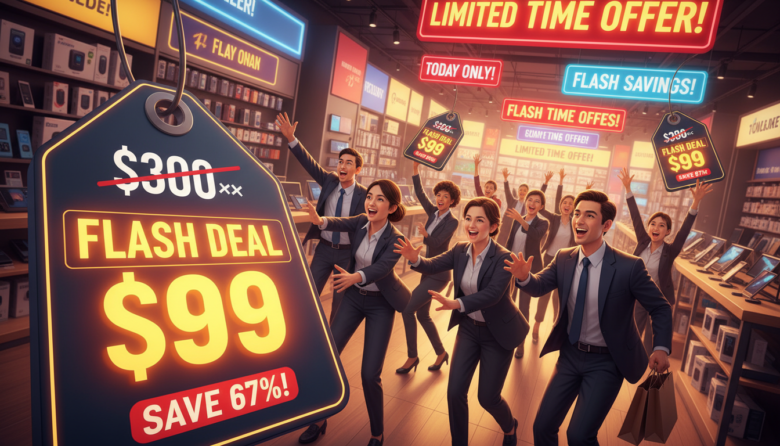
Flash sales create excitement and urgency for shoppers. These limited-time promotions can significantly boost your revenue. The right pricing strategy is crucial for making these events a success.
Price anchoring is a powerful psychological tool. It involves presenting an initial, higher price point to make the promotional offer seem like a better value. This anchoring effect shapes how customers perceive your deal.
When you combine this method with the urgency of a flash sales event, you create a compelling offer. Customers feel they are getting a high-value product for a great price. This guide will show you how to apply these concepts effectively.
Key Takeaways
- Flash deals are time-sensitive promotions that drive immediate sales.
- Price anchoring uses an initial price to shape customer perception.
- Combining urgency with perceived value increases conversion rates.
- This strategy helps make promotional offers appear more attractive.
- Understanding customer psychology is key to effective pricing.
- Proper implementation can lead to measurable improvements in performance.
Introduction to Price Anchors and Flash Deals
Psychological pricing methods leverage cognitive biases to enhance the appeal of limited-time promotions. These approaches help shoppers feel confident about their purchase decisions.
Defining Price Anchors in Retail
Price anchoring establishes a reference point that influences how people view your offer. Retailers show a higher initial cost to make the actual selling amount seem more attractive.
This pricing strategy works because the first number shoppers see becomes their mental benchmark. The anchor price creates a comparison that highlights the deal’s value.
The Role of Flash Deals in Modern Ecommerce
Time-sensitive promotions create urgency that drives immediate action. When combined with proper price anchoring, these events become incredibly effective.
Shoppers perceive greater savings when they see both the original and sale prices. This psychological effect makes flash deals more compelling for modern consumers.
| Anchor Strategy | Example | Effect on Perception |
|---|---|---|
| Original Price Display | $199 crossed out, now $149 | Highlights significant savings |
| Market Value Comparison | “Market Value: $199” vs “Your Price: $149” | Establishes external validation |
| MSRP Reference | Manufacturer’s suggested retail price shown | Adds credibility to the discount |
The Psychology Behind Price Anchoring
Human decision-making relies heavily on mental shortcuts that simplify complex choices. This cognitive process forms the foundation of effective pricing strategies.
Cognitive Bias and the Anchoring Effect
The anchoring-and-adjustment heuristic influences how people evaluate information. Our brains use initial data points as reference markers for all subsequent judgments.
This psychological principle applies across many decision scenarios. From hiring to investments, first impressions create lasting benchmarks.
How Consumers Perceive Value Through References
Shoppers rarely assess costs in absolute terms. Instead, they compare offers against available reference points.
When businesses present a higher initial figure, the actual cost appears more reasonable. This comparison fundamentally alters value perception.
The decoy effect demonstrates how consumers typically choose middle options. Strategic positioning makes certain offers seem optimal.
Understanding these mechanisms helps create transparent pricing strategies. They align with natural cognitive processes rather than manipulating them.
Implementing “price anchoring techniques in short-term deals”
Creating an effective benchmark requires careful consideration of market expectations. This approach helps shoppers recognize genuine value during promotional windows.
Setting Up an Effective Reference Price
Begin by selecting a higher initial figure that provides meaningful contrast. This reference point makes your actual selling amount appear more attractive.
Your benchmark should align with competitor offerings and market standards. Shoppers dismiss unrealistic figures as manipulative rather than valuable.
Visual presentation significantly impacts perception. Clear formatting immediately highlights the difference between reference and promotional figures.
Combining this method with time constraints creates powerful urgency. Limited availability messaging reinforces the temporary nature of special offers.
| Reference Type | Implementation Method | Customer Impact |
|---|---|---|
| Competitor Alignment | Match market leader pricing | Builds credibility through comparison |
| MSRP Reference | Show manufacturer suggested price | Adds authority to the discount |
| Historical Pricing | Display previous selling amount | Demonstrates current opportunity |
Testing different reference levels helps refine your approach. Monitor shopper responses to identify the optimal balance between perceived value and credibility.
Effective Pricing Comparison Techniques
Strategic cost presentation methods transform how consumers evaluate shopping options. These approaches help buyers make confident decisions by providing clear reference points.
Visual contrasts immediately communicate value to shoppers. They simplify complex purchasing decisions through straightforward comparisons.
Strikethrough and Decoy Pricing Strategies
Strikethrough formatting shows the original amount next to the current offer. This visual contrast highlights savings without requiring extensive calculation.
Decoy strategies position premium options beside standard choices. After seeing higher figures, mid-range selections appear more reasonable.
Budget alternatives can also serve as effective anchors. When inexpensive options seem limited, customers gravitate toward better-equipped versions.
Tiered and Bundle Pricing Tactics
Multiple choice structures present various levels at different costs. Typically three to five options create optimal decision frameworks.
Strategic labeling guides shoppers toward preferred selections. “Most Popular” tags influence buyer behavior toward balanced value propositions.
Package combinations bundle products or services together. Middle-tier bundles often represent the sweet spot for perceived value.
Creating Compelling Flash Deals with Anchor Prices
Visual presentation and urgency messaging work together to create compelling shopping experiences. These elements capture attention and drive immediate action from potential buyers.
Designing Visually Impactful Price Displays
Effective displays make cost information immediately visible to shoppers. Customers see the original amount and current offer without searching through details.
Strikethrough formatting clearly shows the savings opportunity. Bold colors and larger fonts highlight the promotional figure. This contrast makes the value proposition obvious at a glance.
Boosting Urgency with Limited-Time Offers
Time constraints create powerful motivation for quick decisions. Countdown timers and expiration notices trigger fear of missing out.
“While supplies last” messaging reinforces scarcity. This approach makes the opportunity feel exclusive. Customers perceive greater value when availability is limited.
| Design Element | Implementation | Customer Impact |
|---|---|---|
| Strikethrough Pricing | Show original amount crossed out | Immediate savings recognition |
| Color Contrast | Use red for discount amounts | Visual emphasis on value |
| Countdown Timers | Display hours/minutes remaining | Increased purchase urgency |
| Stock Indicators | “Only 3 left” messaging | Scarcity-driven action |
Testing different combinations helps identify what resonates best with your audience. The right balance creates offers that feel like exceptional opportunities.
Addressing Common Challenges in Price Anchoring
Businesses often encounter specific hurdles when applying comparative pricing methods to their promotional campaigns. These obstacles can reduce effectiveness if not properly managed.
Avoiding Superficial Discounts
One major challenge involves setting discounts that actually motivate customers. Small percentage reductions often fail to capture attention.
A $10 discount on a $500 television represents only 2% savings. This minimal reduction rarely excites shoppers. Research shows discounts of 15% or more typically drive purchase decisions.
Substantial savings create meaningful contrast with the reference figure. This contrast makes promotional offers compelling.
Ensuring Trust with Honest Anchor Prices
Customer confidence forms the foundation of successful pricing strategies. Dishonest reference points damage long-term relationships.
Today’s shoppers research products extensively before buying. They quickly identify inflated comparison figures. When customers discover misleading information, they lose faith in the business.
Overusing comparative pricing can also reduce effectiveness. Constant “sales” make customers skeptical about true value.
| Challenge | Problem Example | Effective Solution |
|---|---|---|
| Insufficient Discount Size | 2% reduction on high-ticket item | Offer 15%+ meaningful savings |
| Dishonest Reference Points | Claiming false original cost | Use genuine historical pricing |
| Educated Consumer Base | Shoppers research market values | Align with competitor pricing |
| Strategy Overuse | Constant “sale” messaging | Selective application for impact |
Real-World Examples and Case Studies
Examining actual business cases reveals the practical power of reference pricing strategies. These success stories show how companies implement psychological principles to drive customer behavior.
Retail and Ecommerce Success Stories
Netflix provides a compelling example of strategic pricing. Their free trial establishes a zero-cost reference point. After enjoying the service for a month, the subscription fee seems reasonable.
This approach creates strong perceived value. Customers feel they are making a smart choice to continue access.
July luggage demonstrates another effective method. Their bundle pricing creates attractive options for shoppers. Personalized combinations make customers feel they receive better value.
The company achieved remarkable growth using this strategy. Their approach shows how physical products benefit from thoughtful pricing.
Rolex represents the luxury goods market. Their high-end models establish premium reference points. This positioning affects how consumers view competing brands.
Other watch companies appear reasonably priced by comparison. The entire category benefits from this strategic positioning.
These cases prove that reference pricing works across diverse industries. Each example shows tailored implementation for specific customer expectations.
Advanced Strategies for Enhancing Customer Perception
Sophisticated approaches to customer value perception go beyond basic pricing displays. These methods work with natural decision-making patterns to guide choices effectively.
Leveraging Decoy Effects and Free Trial Anchors
The decoy effect influences how consumers evaluate multiple options. When presented with three tiers, most people select the middle choice.
Businesses use this by creating a premium option that makes mid-tier selections appear optimal. This strategic positioning guides perception toward the most profitable choice.
Free trials establish a powerful psychological anchor. Customers become accustomed to having a service at no cost.
Transitioning to paid subscriptions then feels like a potential loss. The value experienced during the trial period justifies this change for most users.
Combining these approaches creates synergistic effects. Tiered pricing alongside trial periods gives customers a way to experience value before committing.
Testing different option sets helps optimize how customers see available choices. The most effective strategies align with genuine value delivery.
Conclusion
Effective promotional campaigns hinge on creating clear value benchmarks that guide customer decision-making. This strategic approach helps shoppers recognize genuine savings during limited-time events.
Proper implementation of reference pricing builds customer trust while highlighting true value. Businesses should focus on transparent comparisons that make purchase decisions easier.
Long-term success comes from delivering authentic value rather than relying on psychological manipulation. When customers feel confident about their choices, both businesses and shoppers benefit.